

A 10x return is a real goal, but the honest version of this story is not a stock tip or a crypto bet. It is a reinvestment engine. With $1,000 and an Amazon reselling business, you buy products below their resale value, sell them for a profit, and roll every dollar of that profit back into the next, larger buy. Do that on a tight cycle, and the numbers compound quickly.
A month is the aggressive end of the range, and most sellers take longer, but the mechanics are the same either way. This guide walks through that engine step by step, and shows where SmartScout replaces guesswork with marketplace data at each stage.
One thing up front: this is an active business, not passive income. The growth comes from your sourcing discipline and how fast you turn inventory, not from a market doing the work for you. That is exactly why it can move faster than investing, and why the research you do before each buy decides whether the engine runs or stalls.
Compounding is the whole trick. If you net 50% on a buy and reinvest all of it, $1,000 becomes $1,500. Reinvest that, and you are at $2,250, then $3,375, and so on.
The table below shows a best-case model at roughly 50% net ROI per cycle, fully reinvested. It assumes nothing is pulled out for living expenses and that you can find enough profitable inventory to absorb a growing budget.
Six reinvestment cycles clear $10,000. If each cycle takes about five days, that lands inside a month. If your buys turn in two weeks instead, the same math plays out over a quarter. The lever you actually control is not the percentage on a lucky flip; it is doing this consistently on products you have verified will sell.
Two assumptions carry the whole model: that you can repeatedly find inventory at a real discount, and that it sells fast enough to free up cash. Both are research problems, which is the part most beginners get wrong and the part the rest of this guide is about.
Each step below builds on the one before it. The first is free. The rest cost money, which is why the order matters: you learn the mechanics before your capital is at risk.
Before you spend any of the $1,000, run a few practice flips using things you no longer use. The point is not the profit; it is learning to price, photograph, and write a listing with zero downside. You also build the one habit that decides whether you make money later: calculating the true total cost.
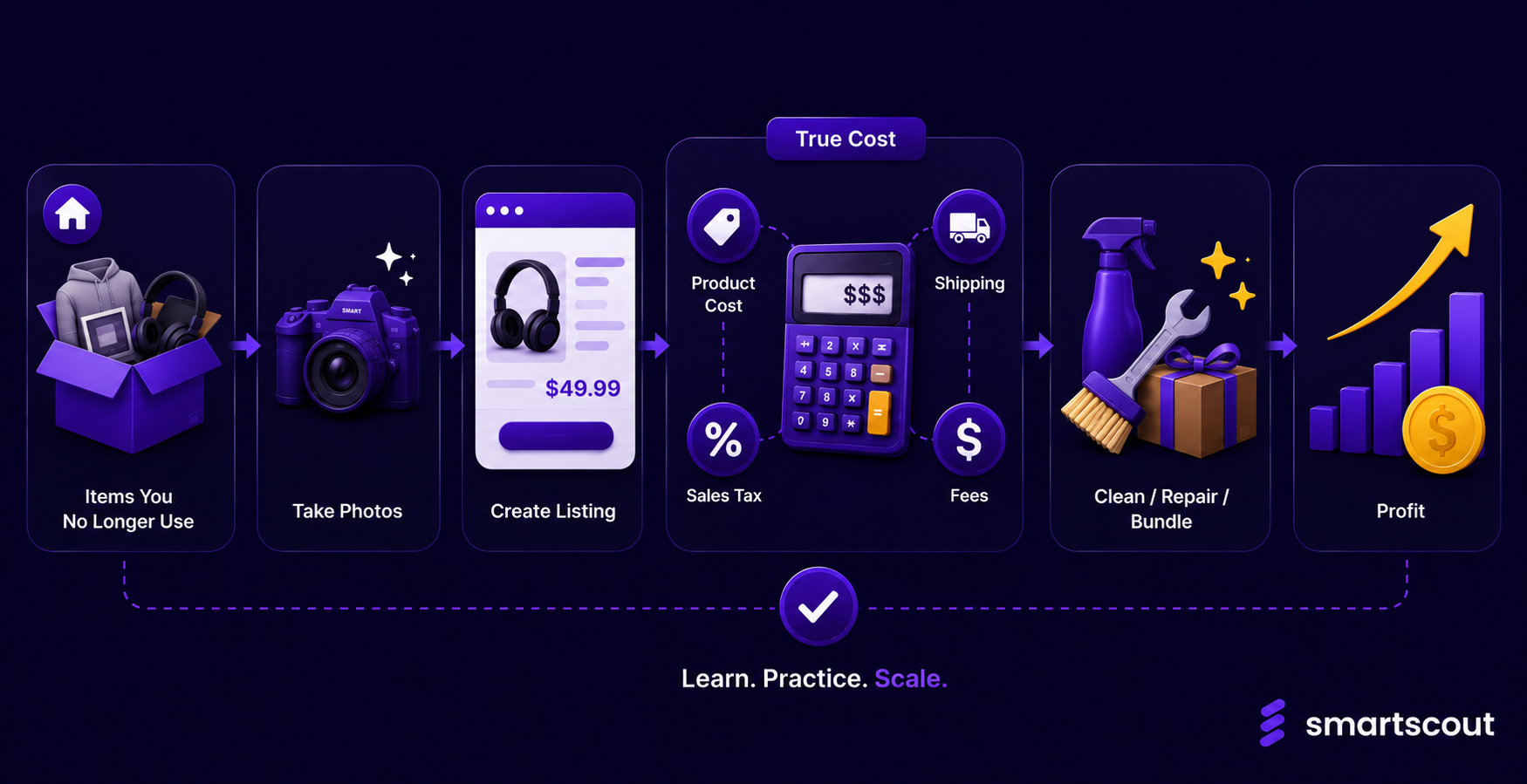
Your real cost on any item is more than the sticker price. Account for all of it:
Profit is what survives after every one of those lines. Sourcing cheaply is half the equation, and adding a little value is the other half. Cleaning, repairing, or bundling an item can justify a higher price for a few minutes of work. Get comfortable here first, because the same discipline scales straight into Amazon.
Random flipping has a ceiling. To grow $1,000 on purpose, you need a repeatable way to find inventory that you know will sell.
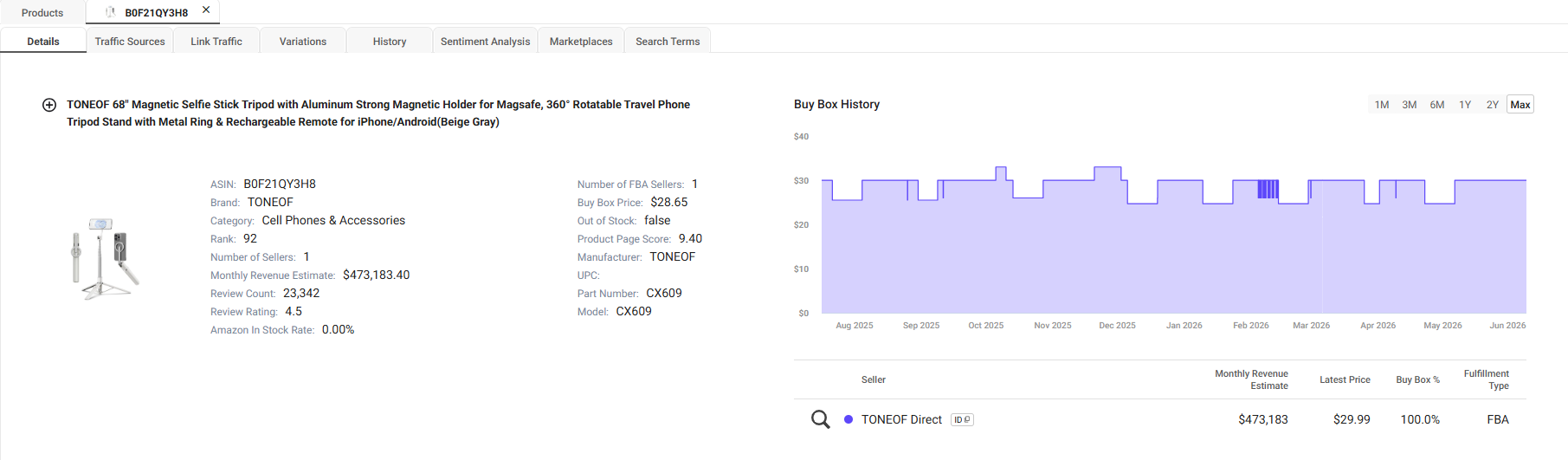
That is the difference between a casual seller and a real Amazon reselling business.
Where the inventory comes from
Find demand and margin with SmartScout, not a hunch
Spotting the gap between what something costs and what it sells for is the entire game. Doing it by feel is how budgets disappear.
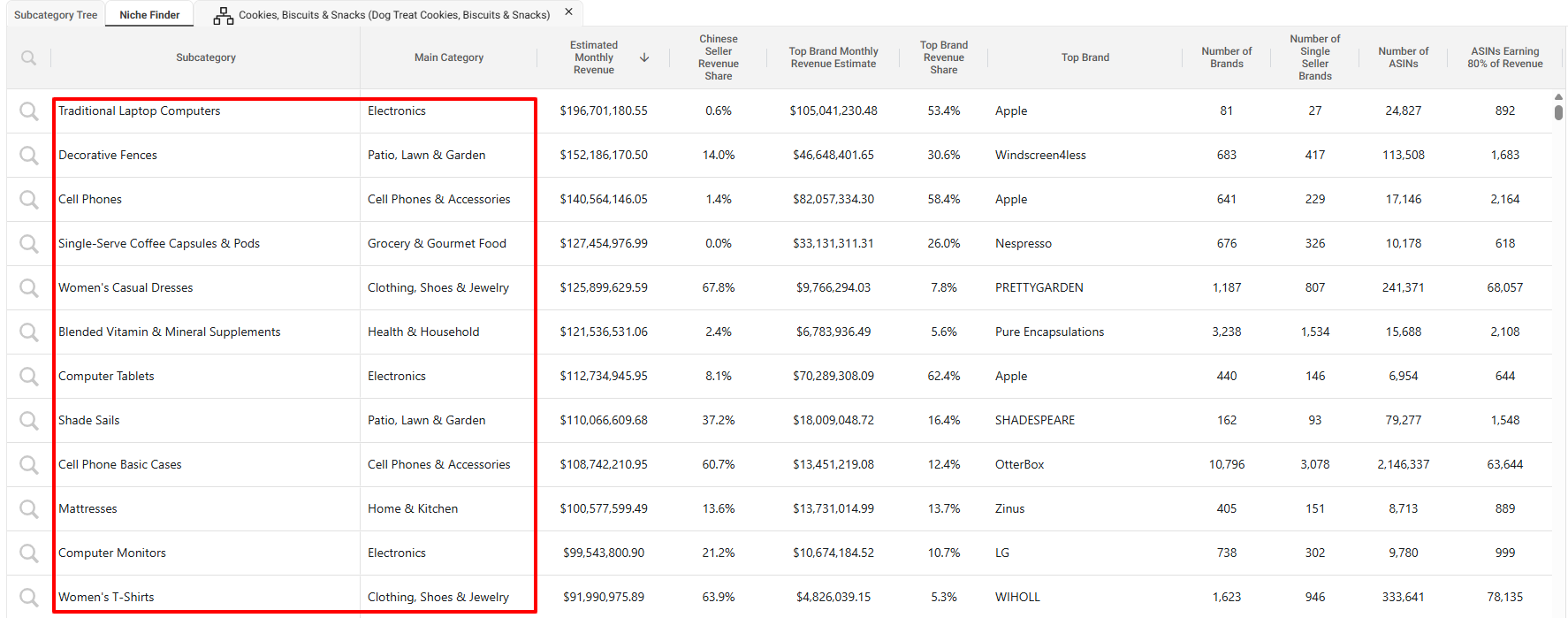
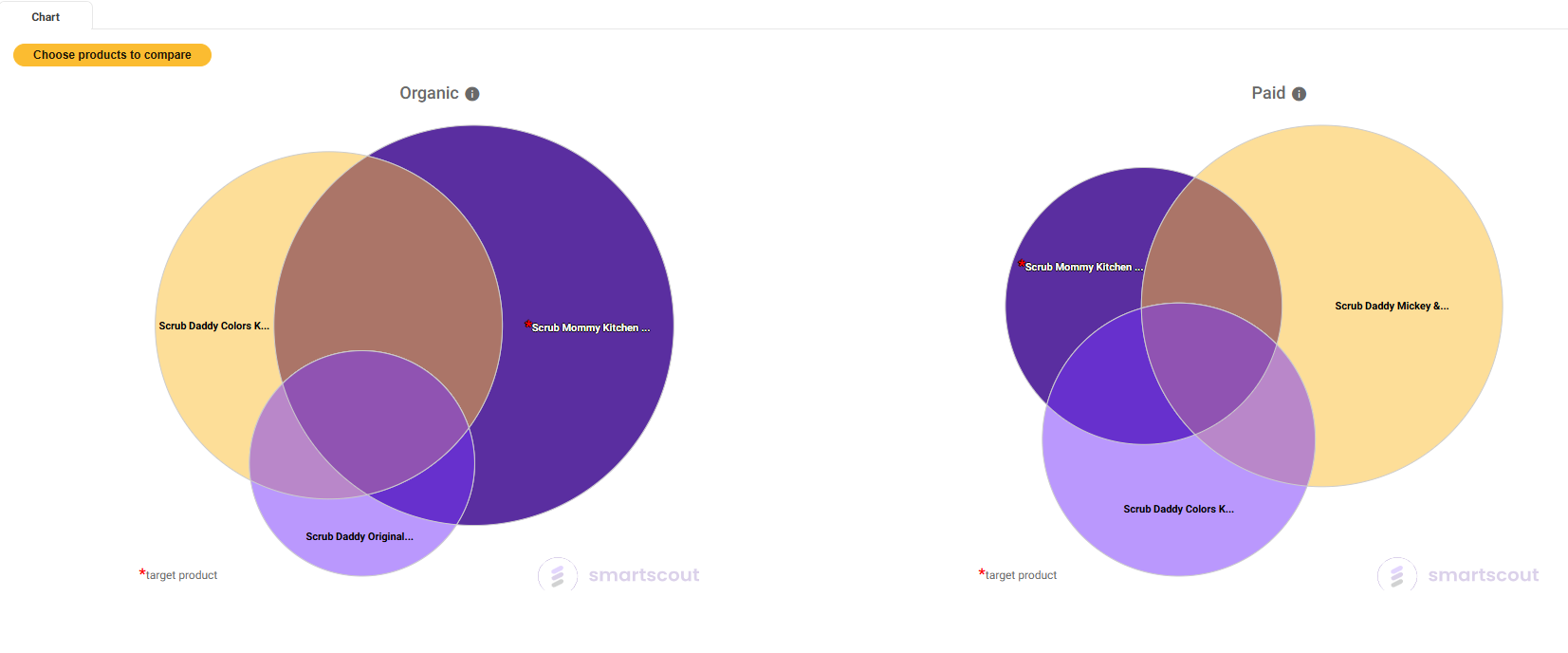
SmartScout closes that gap by letting you read the marketplace instead of guessing at it. Rather than studying one product at a time, you can research entire brands, niches, and sellers:
The table below maps the job you are doing to the SmartScout tool built for it, so you are not hunting through the platform mid-decision.
This is the step the original budget killer skips. A product can look like a steal and still lose money once Amazon takes its cut. Run every candidate through the SmartScout FBA Calculator before you buy. It shows the referral fee, fulfillment fee, and your real net per unit, so you commit cash only to items that clear a margin you are happy with. With $1,000 on the line, one bad bulk buy can stall the whole engine, and a thirty-second check prevents it.
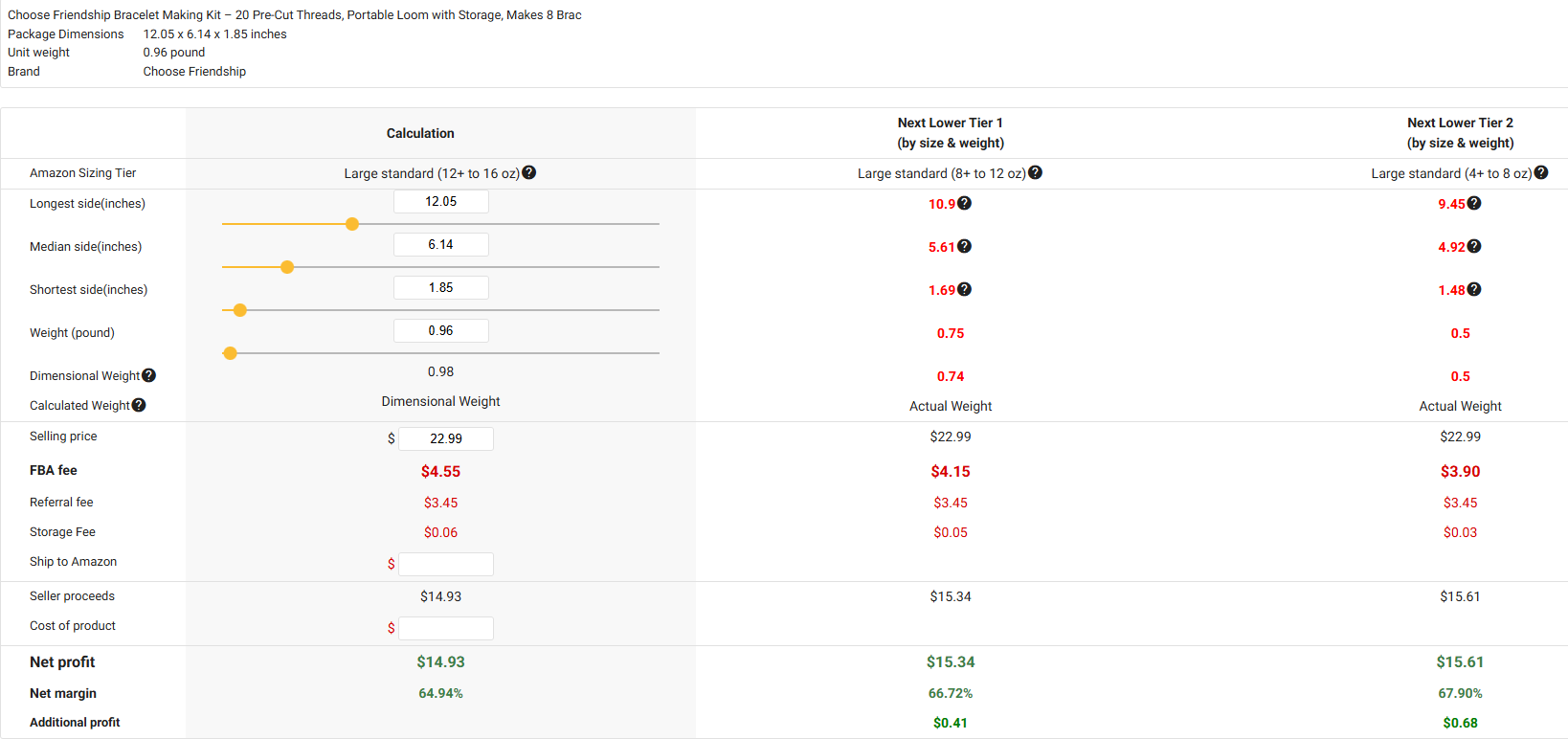
Pair the math with demand. A 40% margin on a product that sells twice a month does nothing for a fast reinvestment cycle. You want a healthy margin and steady velocity, which is the combination SmartScout is designed to surface.
Finding a profitable product is only half the work. Buyers still have to find your listing. Optimizing it means putting the words your customers actually type into the places Amazon reads them: the title, bullets, description, and backend search terms.
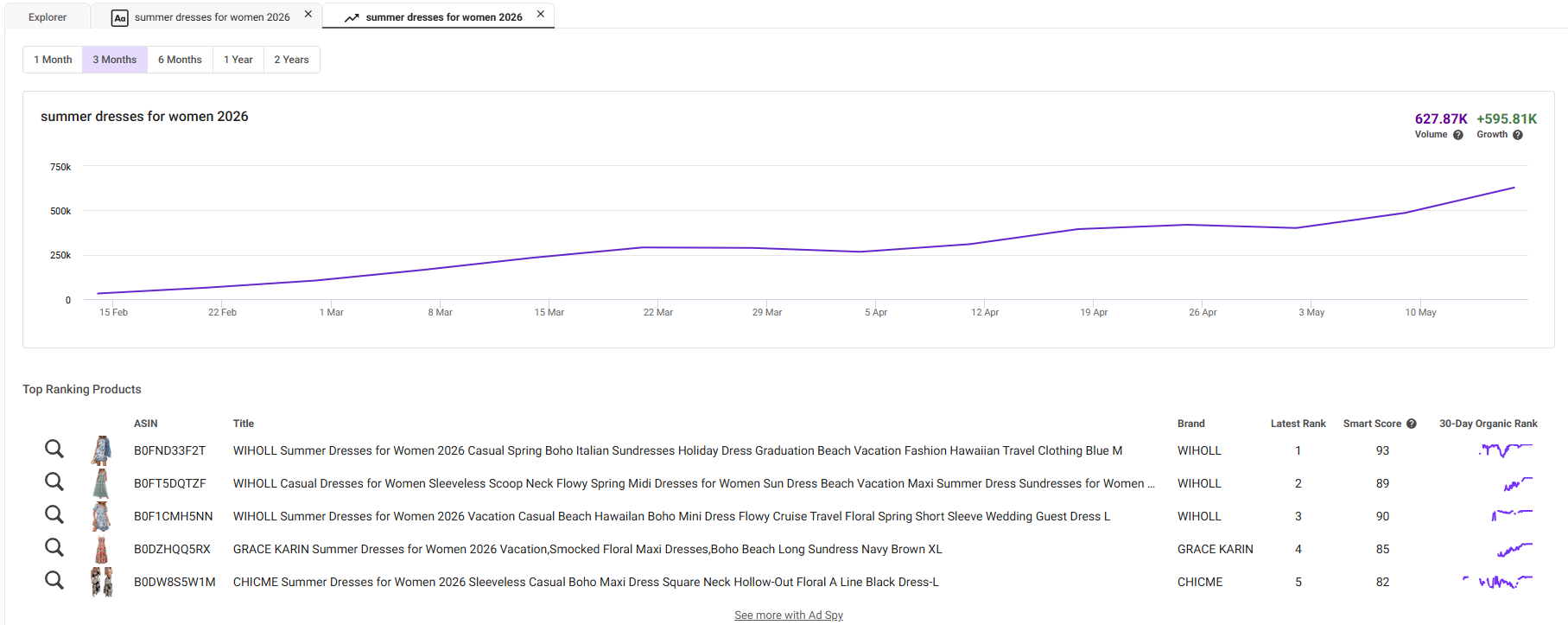
Start PPC with a small test budget, so you learn which terms convert, then push spend toward the winners and cut the rest. Off-Amazon traffic from short product videos and reviews can add demand and lift your branded searches, but it is a multiplier on a sound listing, not a substitute for one.
Look back at the math table. The jump from $1,000 to $10,000 is not one brilliant flip; it is six ordinary ones with every dollar of profit rolled forward. Pulling profit out early is the most common way the climb stalls.
Each completed cycle of buy, sell, and reinvest should feed a slightly bigger and better-researched next buy.
Velocity matters as much as margin. A 30% net product that turns in four days will out-compound a 60% product that sits for a month. Prioritize inventory that moves.
The math only works when capital keeps moving. Here is what stalls the engine, and every one of these is avoidable.
Bigger budgets mean bigger mistakes, so build a few guardrails as the numbers grow. None of this requires a finance degree, just discipline.
Risk management here is not about hedging in markets; it is about not letting one bad buy or one suspended listing wipe out several good cycles.
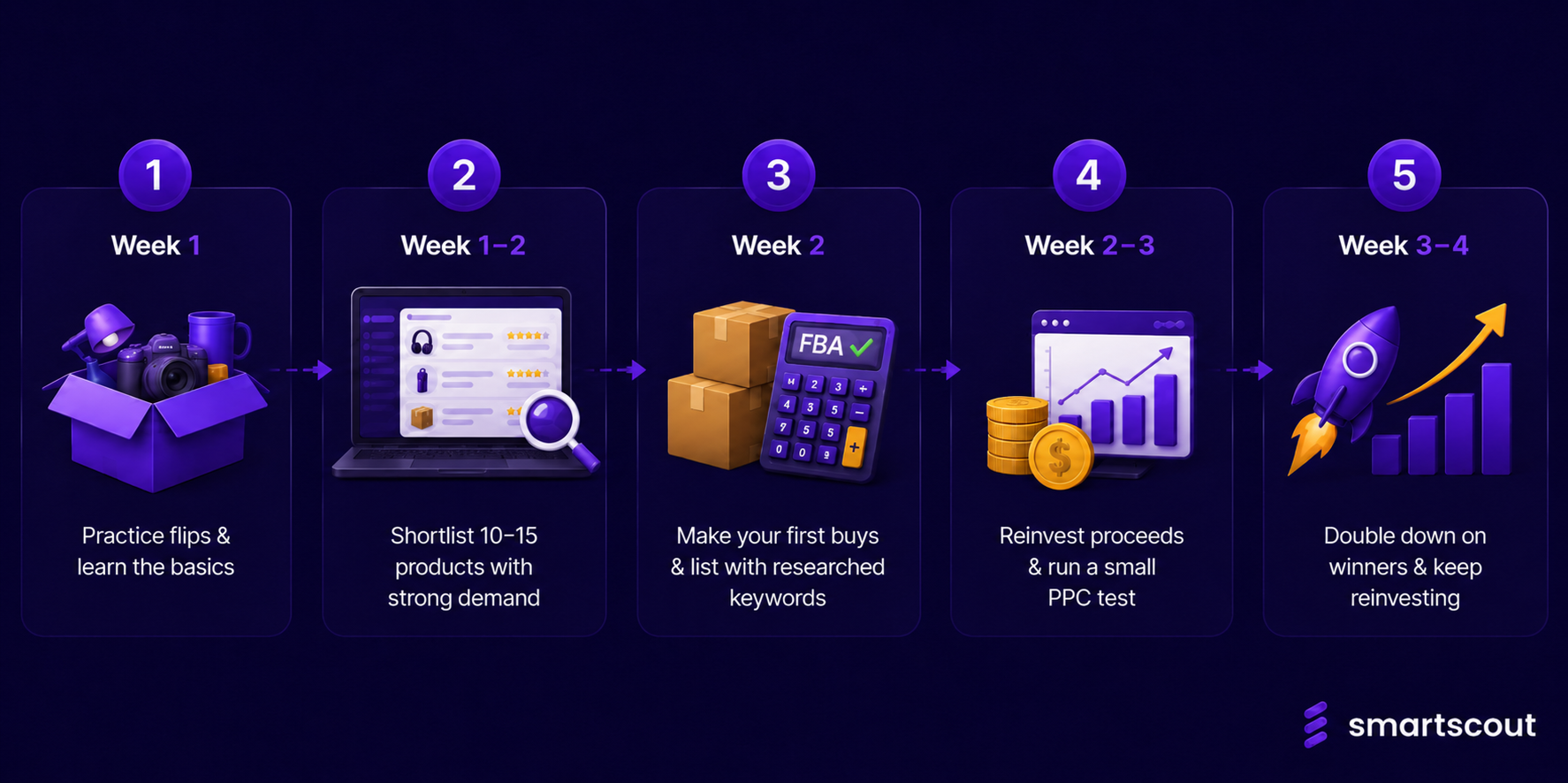
Hit every cycle and a month is possible. Miss a few, and you are looking at a quarter, which is still a genuine 10x. Either outcome beats waiting roughly a decade for a market average to do the same thing, and you control the pace.
Turning $1,000 into $10,000 is a function of how many disciplined reinvestment cycles you can run and how well you research each buy. The flips teach you the mechanics, the FBA Calculator protects your margin, and reinvestment does the compounding.
SmartScout is the edge that tells you which products, brands, and niches are worth the effort, so your capital lands on inventory that actually sells. Skill and consistency drive the result, and good data is what keeps you from guessing.
Start using SmartScout with risk-free pricing
7-day money-back guarantee. Cancel any time.


